

Key Takeaways
- Facial symmetry measures how closely the left and right sides of a face match, it’s a structural measurement, not a beauty verdict.
- A 2025 study in Scientific Reports found averageness and femininity, not symmetry, most consistently predict attractiveness judgments, symmetry plays a smaller, more mixed role than commonly assumed.
- Nearly every face, including widely admired ones, carries measurable asymmetry once analyzed closely.
- Cameras highlight asymmetry more than mirrors do, since a mirror shows a reversed reflection you’re used to seeing.
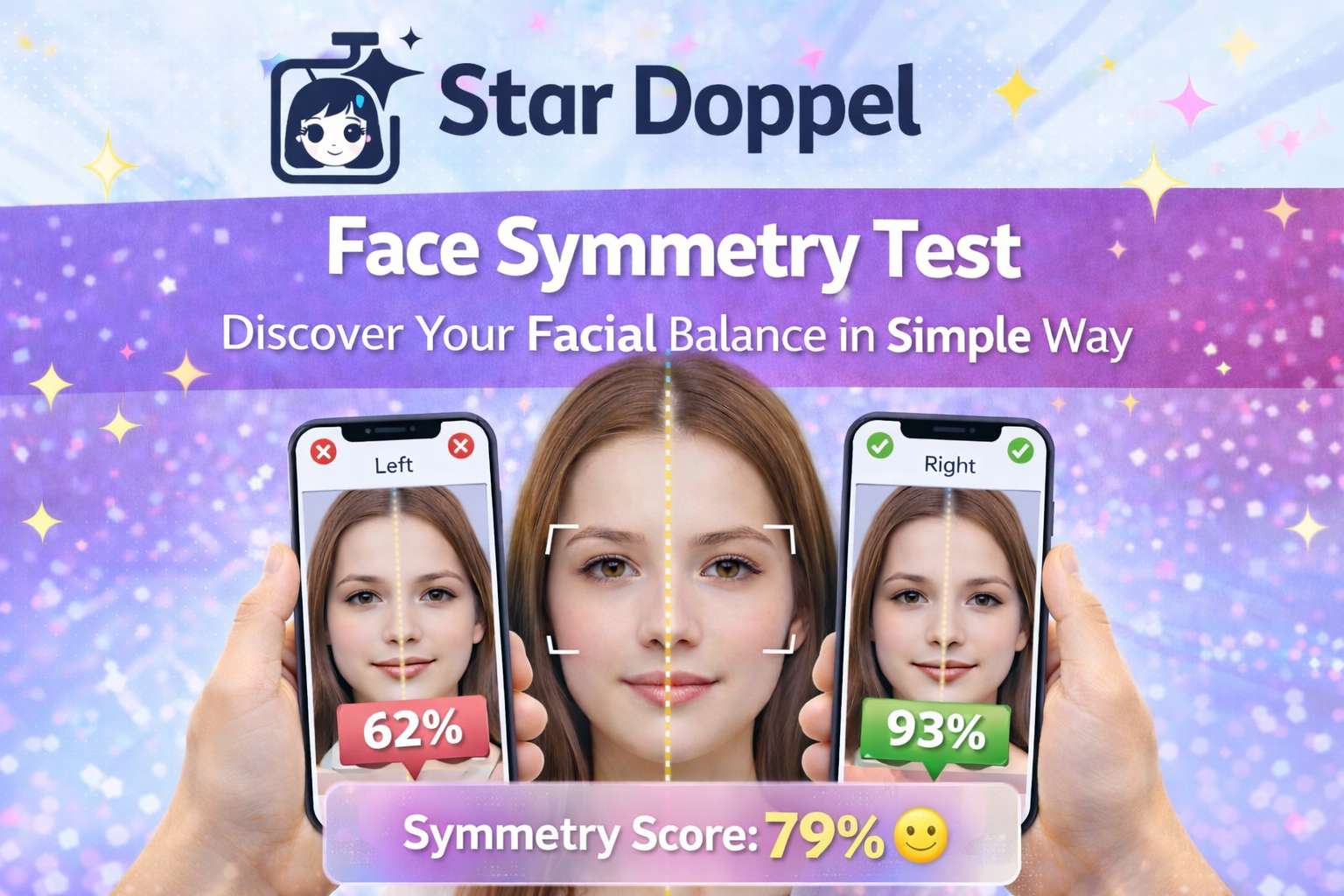
A face symmetry test is an AI-based analysis that compares the left and right sides of a face. It looks at features like the eyes, nose, lips, and jawline to see how evenly they align across the center of the face. A perfectly symmetrical face is extremely rare, and even widely admired public figures show measurable differences between both sides once analyzed closely. Want to measure your own? Try the AI face symmetry tool.
The test exists purely for structural insight rather than to pass judgment. It shows how a face is uniquely built rather than labeling any result as good or bad.
Facial Symmetry Versus Facial Harmony
These two terms get confused constantly even though they describe different things.
| Facial Symmetry | Facial Harmony |
|---|---|
| Measures how closely the left and right sides of a face match | Measures how well all facial features work together as a whole |
| A structural side-by-side comparison | A broader impression of proportion and balance |
| Can be low while a face still looks appealing overall | Often more closely linked to how attractive a face is perceived to be |
A face can carry small measurable asymmetries and still look highly appealing because its features flow naturally together. This is why many recognizable and admired faces don’t score perfectly on symmetry yet still read as pleasing and distinctive. Symmetry explains structure, harmony explains the bigger picture of how that structure comes together. Read our full guide to facial harmony for the history and science behind that broader concept, or check your golden ratio proportions directly.
How the Analysis Works
The process behind a face symmetry test happens in a few clear steps:
- Landmark detection. The AI identifies key points across the face, including the corners of the eyes, the tip of the nose, the edges of the mouth, and the outline of the jaw.
- Mapping both sides. Those points get grouped by left and right side relative to the center of the face.
- Measuring distance and angle. The system compares the position of each landmark against its mirrored counterpart to calculate a difference for that specific feature.
- Generating a score. Individual feature comparisons combine into an overall symmetry score along with a breakdown by area such as eyes, jawline, and mouth.
This entire process typically completes within seconds and produces a clear score along with visual insight into which specific areas show the most and least balance.
Understanding Your Results Without Overthinking Them
A very common reaction after seeing a result is wondering whether the score means a face is good or bad. That’s the wrong framing entirely. A symmetry score is a measurement of alignment, not a beauty judgment. Most faces fall somewhere in the middle rather than being fully symmetrical or heavily asymmetrical.
Faces that score especially high on symmetry tend to show even eye height, similar cheekbone placement, and balanced lip position, but very few people naturally have this across every single feature. A lower score doesn’t mean a face is unattractive. Slight imbalance often adds character and is part of what makes many well-known faces memorable rather than generic.
Can Facial Balance Be Improved
Bone structure itself doesn’t change quickly or easily, but a few habits can support more even muscle development and presentation over time.
- Posture awareness. Sleeping consistently on one side can gradually affect the muscles and skin on that side of the face. A 2022 study in Ophthalmic Plastic & Reconstructive Surgery found that people with a habitual sleep-side preference showed measurably more upper-eyelid asymmetry on that side compared to the other.
- Even chewing habits. Favoring one side of the mouth repeatedly can build slightly uneven jaw muscle development over the years. A 2017 study in the Journal of Orofacial Sciences found a wider hemiface on the preferred chewing side in most of the asymmetric cases it examined.
- Facial exercises. Gentle stretching and relaxing built-up facial tension may support more even muscle engagement across both sides.
- Addressing dental misalignment. A dentist or orthodontist can identify structural contributors to visible asymmetry that go beyond posture or habit alone.
The goal with any of these habits is better balance over time rather than chasing an unrealistic standard of perfect symmetry, since small consistent changes matter far more than any single quick fix.
Why Photos Highlight Symmetry More Than Mirrors
If one side of your face consistently looks better in photos than the other, you’re not imagining it. Cameras tend to highlight asymmetry more clearly than a mirror does, since a mirror shows a reversed reflection you’re used to seeing every day while a camera captures the face as others actually see it. This isn’t just a feeling: a classic study on the mere-exposure effect found that people consistently preferred their mirror-reversed image over their true (camera-facing) photo, while friends and partners shown the same pair picked the true image every time, simply because that’s the version they’re used to seeing.
Understanding your own symmetry can genuinely help with choosing better angles and lighting for photos. Some tools also offer a mirrored face preview which flips one half of the face to simulate a fully symmetrical version. These are purely visual novelties meant for fun rather than an accurate reflection of real proportions, since a mirrored composite often looks noticeably artificial compared to an actual face.
Getting an Accurate Symmetry Reading
| Habit | Why It Helps |
|---|---|
| Face the camera directly | Prevents one side of the face from appearing closer to the lens than the other |
| Keep your head level | A tilted head can shift eye height in the frame even when structure is even |
| Use a relaxed neutral expression | Smiling or squinting pulls muscles unevenly for most people |
| Use even front-facing lighting | Shadow across one side of the face can distort measured proportions |
What the Research Actually Says About Symmetry and Attractiveness
Symmetry gets treated as the main driver of attractiveness in a lot of casual writing, but the research is more nuanced than that. A 2025 study published in Scientific Reports (Nature) found that averageness and femininity, not symmetry and masculinity, most consistently predicted attractiveness judgments across both male and female faces. Earlier research on the topic found mixed results by sex: symmetry affected ratings for male faces but not clearly for female faces, while averageness mattered for both.
The likely explanation, per this body of research, is that symmetry may influence attractiveness indirectly, through perceived facial “normality”, rather than as a direct, standalone factor. In practice, this means a lower symmetry score says very little about how attractive a face reads overall.
Myth: A Perfectly Mirrored Face Would Look More Beautiful
Digitally mirroring one half of a face to create a fully symmetrical composite tends to produce results that look uncanny rather than more appealing, since real faces always carry some natural asymmetry and a perfectly mirrored version reads as artificial to most viewers.
Myth: Asymmetry Is a Sign of a Health Problem
Minor asymmetry that has been present consistently over time is a normal structural trait rather than a health concern. Asymmetry that appears suddenly or comes with other symptoms like numbness or drooping is a different matter entirely, and worth a prompt conversation with a doctor rather than a cosmetic one.
Symmetry Alongside Other Facial Analysis
A symmetry score becomes more meaningful when viewed alongside other structural details from the same photo rather than in isolation. Pairing a symmetry result with face shape, eye shape, and overall proportion analysis gives a fuller picture of how a face is uniquely structured. Many people also enjoy exploring which celebrities they resemble as an additional point of curiosity once they understand their own facial structure a bit better, though this is best treated as entertainment rather than any kind of validation.
This combined view also reframes what a face analysis tool is actually for. It’s a way to learn the vocabulary of your own features, not a scoreboard to compare yourself against anyone else. Confidence and expression consistently stand out far more in how people perceive a face than any single measured proportion ever could on its own.
Frequently Asked Questions
What is facial symmetry, exactly?
It’s an AI-based analysis that compares the left and right sides of a face across features like the eyes, nose, lips, and jawline to produce a structural symmetry score.
Is a perfectly symmetrical face possible?
No. Nearly every face carries some degree of natural asymmetry, and even widely admired public figures show measurable differences between both sides once analyzed closely.
Does a low symmetry score mean someone is unattractive?
No. Research points to averageness and femininity, not symmetry, as the more consistent predictors of attractiveness, and many admired faces score lower on strict symmetry while still appearing highly appealing.
Can facial asymmetry actually be improved?
Underlying bone structure doesn’t change easily, but posture awareness, even chewing habits, gentle facial exercises, and addressing dental misalignment can support more balanced presentation over time.
Why does my face look different in photos than in the mirror?
A mirror shows a reversed reflection you’re used to seeing daily while a camera captures your face the way others actually see it, which is why asymmetry often looks more noticeable in photos.
Why did my symmetry score change between two different photos?
Small differences in angle, lighting, or expression can shift the measurement enough to change the score. This is expected and normal rather than a sign the analysis is unreliable.
Do celebrities or models have perfectly symmetrical faces?
Not usually. Even widely admired public figures show measurable asymmetry once analyzed closely, since perfect symmetry is genuinely rare rather than a trait unique to less recognizable faces.
Is it worth checking symmetry alongside other facial analysis results?
Yes, viewing a symmetry score alongside face shape and proportion analysis from the same photo gives a fuller structural picture rather than relying on one isolated number.
Symmetry is one small piece of how a face reads to others, not the whole picture. Try the AI face symmetry tool to see your own structural breakdown, or explore facial harmony for the fuller context.
Related Articles
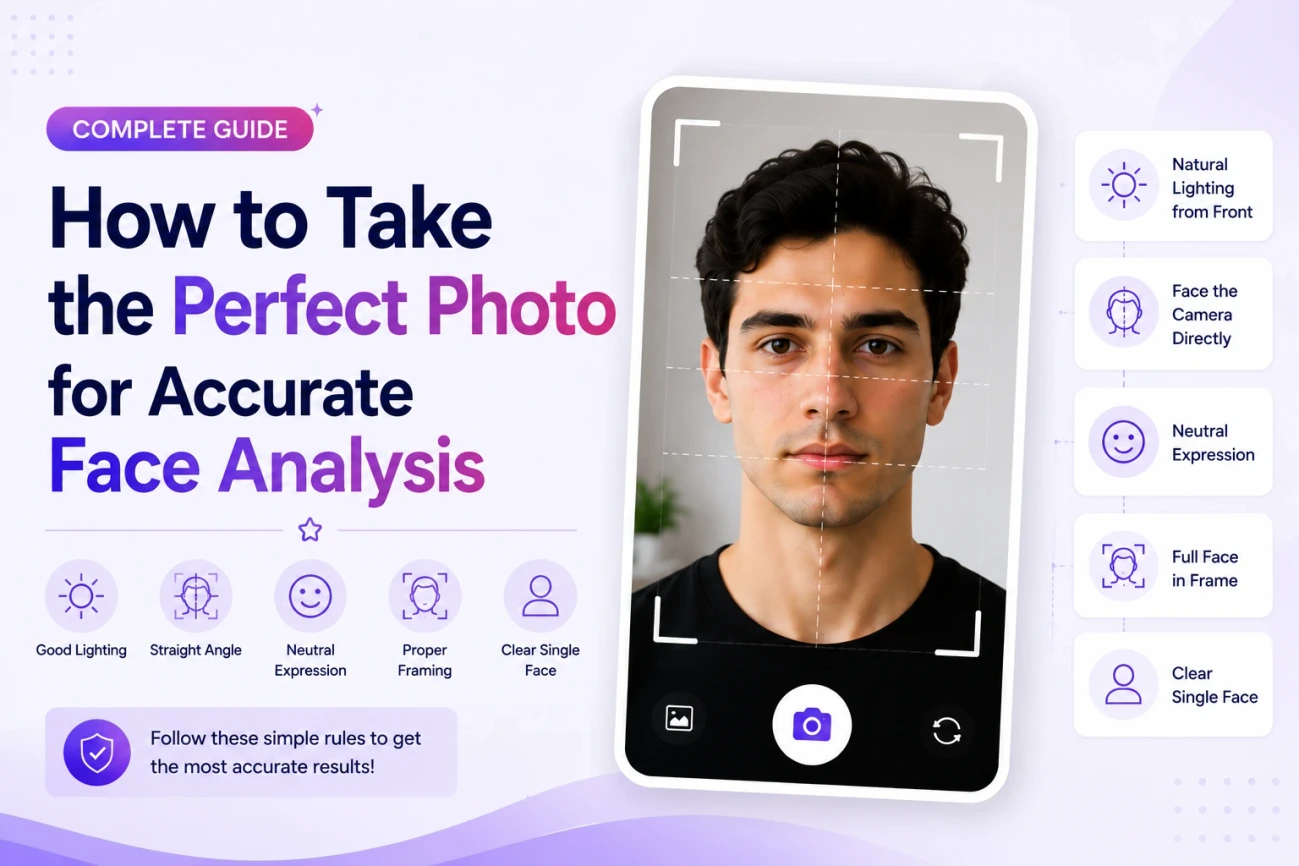
How to Take the Perfect Photo for Accurate Face Analysis
You upload a photo. The result comes back and something feels off. Your face shape looks wrong. Your symmetry score seems too low. Your age…
Read article
Facial Harmony: Where the Idea Comes From and What Science Actually Says
The phrase “facial harmony” shows up constantly in beauty and cosmetic conversations yet it rarely gets explained properly. This guide traces where the concept actually…
Read article
Which Kpop Idol Do I Look Like? Free AI Face Match Test
Detecting face landmarks… Analyzing facial features… Matching celebrity database… Finalizing results… Usually takes 5–15 seconds Drop Your Photo Here — or — Choose File JPG…
Read article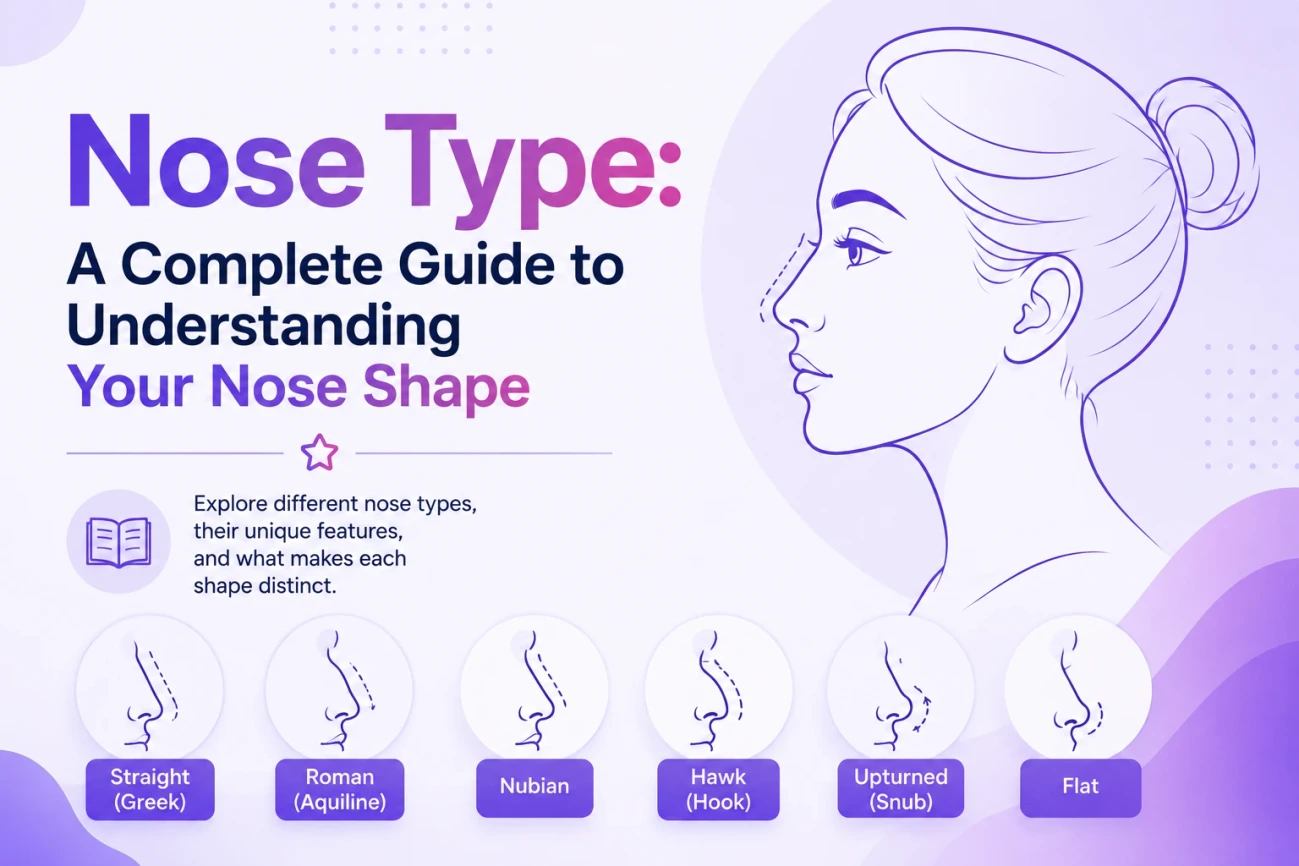
Nose Type: A Complete Guide to Understanding Your Nose Shape
Search “what’s my nose type” and you’ll find a scattered mess of forum threads, half-answered Reddit posts, and quizzes that ask you to pick from…
Read article
Face Shapes Explained: How to Identify Yours at Home
Understanding face shapes is one of those small things that makes a surprisingly big difference. It shapes which haircut which glasses which makeup style and…
Read article
Best Hairstyles for a Round Face: Complete Styling Guide
A round face is defined by soft curves fuller cheeks and width that sits roughly equal to length with no sharp jaw angle anywhere along…
Read article