Nearly everyone has had the experience of seeing a stranger and thinking they look exactly like someone they know. This is not just a coincidence story. There is genuine research behind why unrelated people can share remarkably similar facial features.
(Curious who your own look-alike might be? Try our Celebrity Look-Alike Finder.)
A notable 2022 study published in the journal Cell Reports examined pairs of people who looked strikingly alike, identified through a photography project, and found something genuinely interesting. Many of these look alike pairs shared similar patterns in their DNA even though they had no known family relationship. The faces were similar enough that facial recognition software, the kind used in security and identification systems, had difficulty telling them apart even though traditional genetic testing confirmed they were not related in any conventional sense.
The likely explanation is not mysterious. With around eight billion people on Earth and a finite number of ways facial features can combine certain combinations of genes affecting face shape are bound to recur across unrelated lineages. The face is built from a limited set of structural variables including eye spacing jaw width and nose projection, and at global population scale some unrelated people will land on very similar combinations purely by probability.
How Many Combinations Does a Face Actually Have
Facial structure is determined by dozens of measurable variables each with a range of possible values.
- Bridge height and nose projection
- Jaw width and chin shape
- Eye spacing and eye shape
- Cheekbone position and prominence
- Overall face length to width ratio
While the exact math behind this is complex researchers studying facial recognition systems have noted that the number of meaningfully distinct faces is large but not infinite especially when accounting for how forgiving human visual perception actually is. People are good at recognizing broad similarity but far less precise than software at detecting subtle differences which is part of why doppelgangers feel more uncanny to us than they would to a precise measurement system.
Chance Encounter Versus AI Search
| Chance Encounter | AI Powered Search |
|---|---|
| Relies on being in the same place as your look alike by coincidence | Actively compares your measured proportions against a large database |
| Based on a passing visual impression | Based on specific landmark measurements rather than a general impression |
| Extremely rare in practice | Can surface a close structural match within seconds |
Why This Phenomenon Captures Public Interest
The doppelganger concept has deep roots in folklore. Many cultures carry legends about meeting one’s double often treated as an omen of some kind. The modern fascination is less superstitious but follows a similar thread. There is something genuinely unsettling and fascinating about the idea that your specific individual face is not necessarily unique in the world.
Social media has amplified this considerably with viral doppelganger photo pairs regularly circulating and AI powered matching tools like the one on this site making it easy to explore the question for your own face rather than waiting for a chance encounter that may never happen.
How AI Look Alike Matching Actually Works
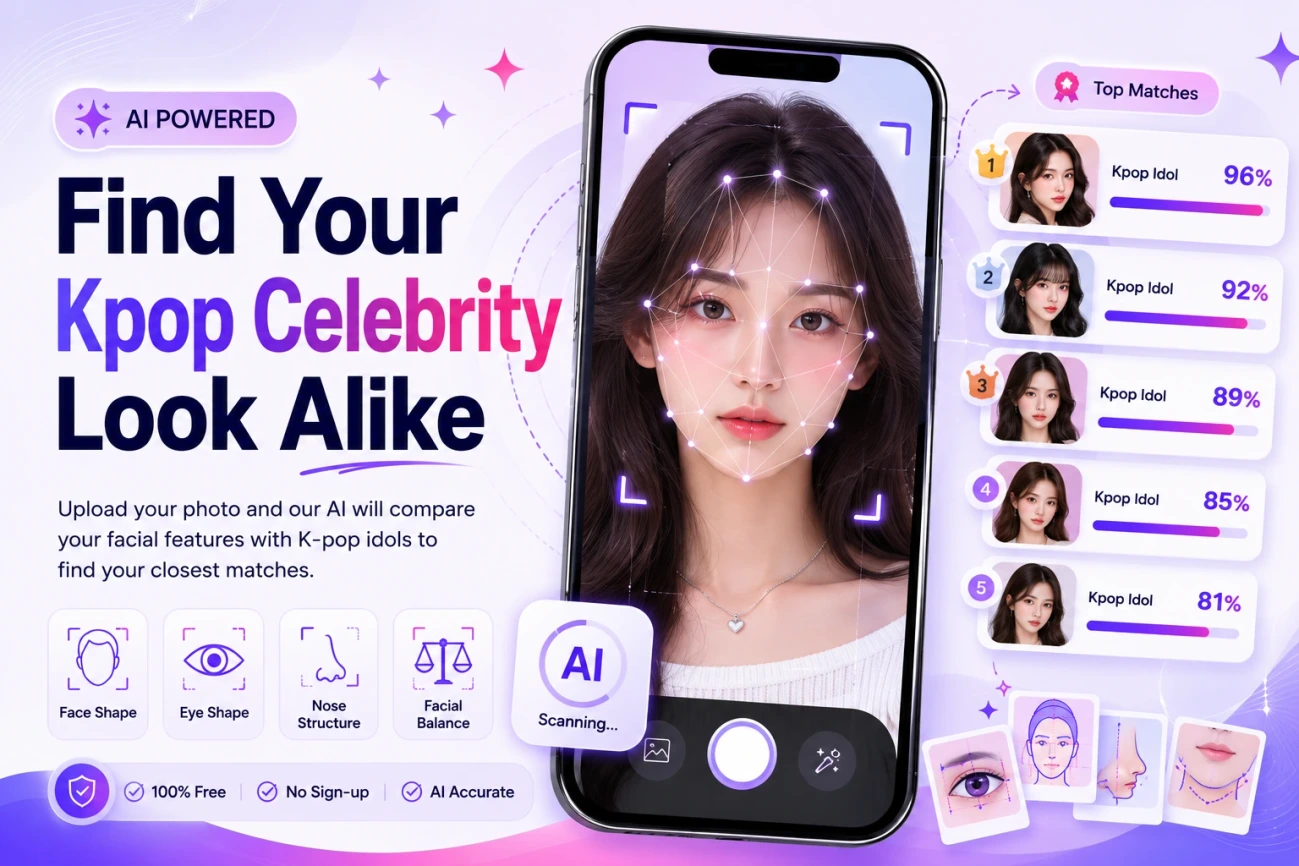
Modern look alike tools use facial recognition technology, the same general category of technology used in security and photo organization systems, to map facial landmarks into a structured comparison.
- Landmark mapping. Eye position nose shape jaw structure and dozens of other points get identified across the uploaded photo.
- Numerical representation. Those points get converted into a set of measured proportions unique to that face.
- Database comparison. That representation gets compared against a database of other faces to find the closest matches by measured similarity rather than vague visual impression.
This is meaningfully different from how a person might casually say you look like a young version of their cousin based on a general impression. The AI is comparing specific measured proportions rather than a passing feeling of resemblance.
A Grounded Way to Think About Your Results
It is worth holding two things at once. The doppelganger phenomenon has genuine scientific grounding since the 2022 Cell Reports research is real and genuinely fascinating. At the same time any specific AI generated match should be treated as entertainment rather than a precise scientific claim about your individual face. Photo quality lighting and the specific comparison database all affect results. Think of it as a fun starting point for curiosity rather than a rigorous genetic or biometric finding.
Getting the Most Accurate Match From Your Photo
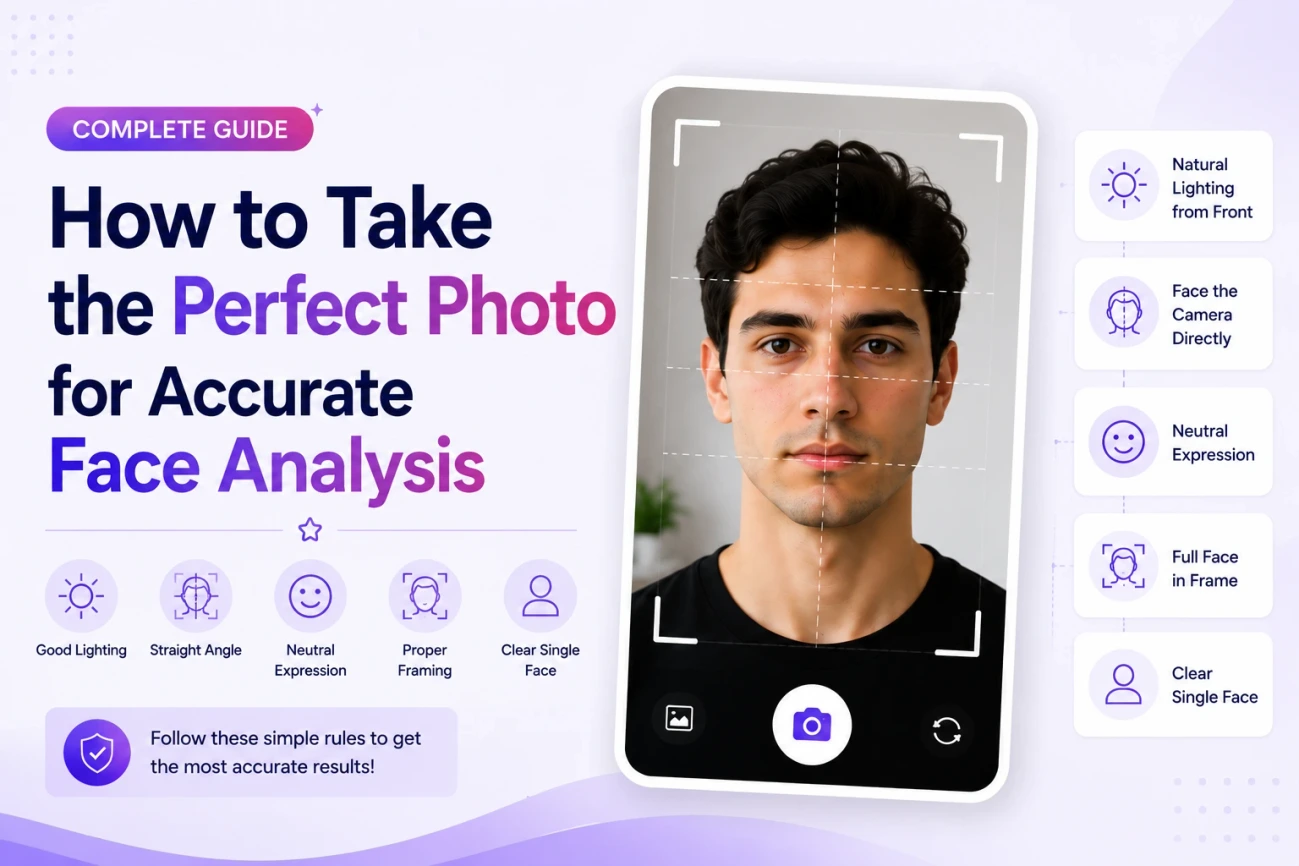
- Use a clear front facing photo. Angled photos distort how landmark distances get measured relative to each other.
- Keep lighting even. Shadow across one side of the face can obscure detail the comparison depends on.
- Avoid heavy filters. Smoothing or reshaping features means the AI is no longer reading your natural structure.
- Use a recent photo. Faces change gradually over the years so an outdated photo may not reflect current structure accurately.
Why Some People Never Find a Striking Match
Not everyone who tries a look alike search gets a dramatic uncanny result and that is entirely expected. The 2022 research specifically studied pairs already identified as strikingly similar through a dedicated photography project, meaning those cases represent a notable but relatively rare degree of resemblance rather than something guaranteed for every face. A more moderate degree of resemblance to several people is far more statistically common than an uncanny one to one match, so a modest result is not a sign that anything went wrong with the analysis.
Doppelganger Beliefs Across Different Cultures
The idea of a facial double shows up in surprisingly varied forms across world folklore, each culture attaching its own meaning to the concept.
- German folklore is where the term doppelganger itself originates, roughly translating to double walker, often associated with encountering a ghostly counterpart of oneself.
- Norse mythology includes the concept of a vardøger, a spirit believed to precede a person and be seen or heard performing their actions before they arrive.
- Ancient Egyptian belief described the ka, a spiritual double created alongside every person at birth.
- Various folk traditions across different regions treat seeing one’s own double as an omen, sometimes associated with significant life events.
What is interesting is that these older cultural ideas were built around encountering a spiritual or supernatural double rather than a genetic explanation. Modern research reframes the same basic human fascination in structural and statistical terms instead, though the emotional pull of the concept has clearly carried through largely unchanged across centuries.
Combining a Doppelganger Search With Other Face Analysis
A look alike result becomes more interesting when paired with other structural details from the same photo. Looking at a celebrity match alongside your own face shape eye shape and estimated age gives a fuller picture of your features rather than treating the doppelganger question in isolation. Many people find it genuinely fun to explore several types of analysis from a single upload since each one highlights a different aspect of facial structure that a single result on its own would not fully capture.
Frequently Asked Questions
Is there real scientific research on doppelgangers?
Yes. A 2022 study in Cell Reports found that look alike pairs often shared genetic similarities despite no known family relationship, suggesting that certain facial feature gene combinations can recur independently across unrelated lineages.
Why do unrelated people end up looking alike?
With a large global population and a finite set of variables that determine facial structure, certain combinations are statistically likely to recur in people without any family connection.
Is it actually likely that I have a doppelganger somewhere?
Some degree of resemblance to at least one other person globally is plausible given population size, though a striking easily confused for each other resemblance like the kind in the 2022 study appears to be less common.
How does AI determine look alike matches?
It maps facial landmarks into a numerical representation of your proportions then compares that representation against a database of other faces to identify the closest measured matches.
Does a doppelganger match mean we share family ancestry?
Not necessarily. The 2022 research found genetic similarities in some look alike pairs without any known family relationship, meaning structural resemblance does not automatically imply a shared family line.
Why did my result show a different match on a second attempt?
Differences in lighting angle or expression between two photos can shift the measured proportions slightly which can change which match rises to the top of the comparison.
Where does the word doppelganger actually come from?
It originates from German folklore, roughly translating to double walker, historically associated with encountering a ghostly counterpart of oneself rather than a genetic or statistical explanation.
Is it worth exploring other face analysis tools alongside a doppelganger search?
Yes, pairing a look alike result with face shape eye shape and age analysis from the same photo gives a fuller structural picture rather than treating the resemblance question on its own.