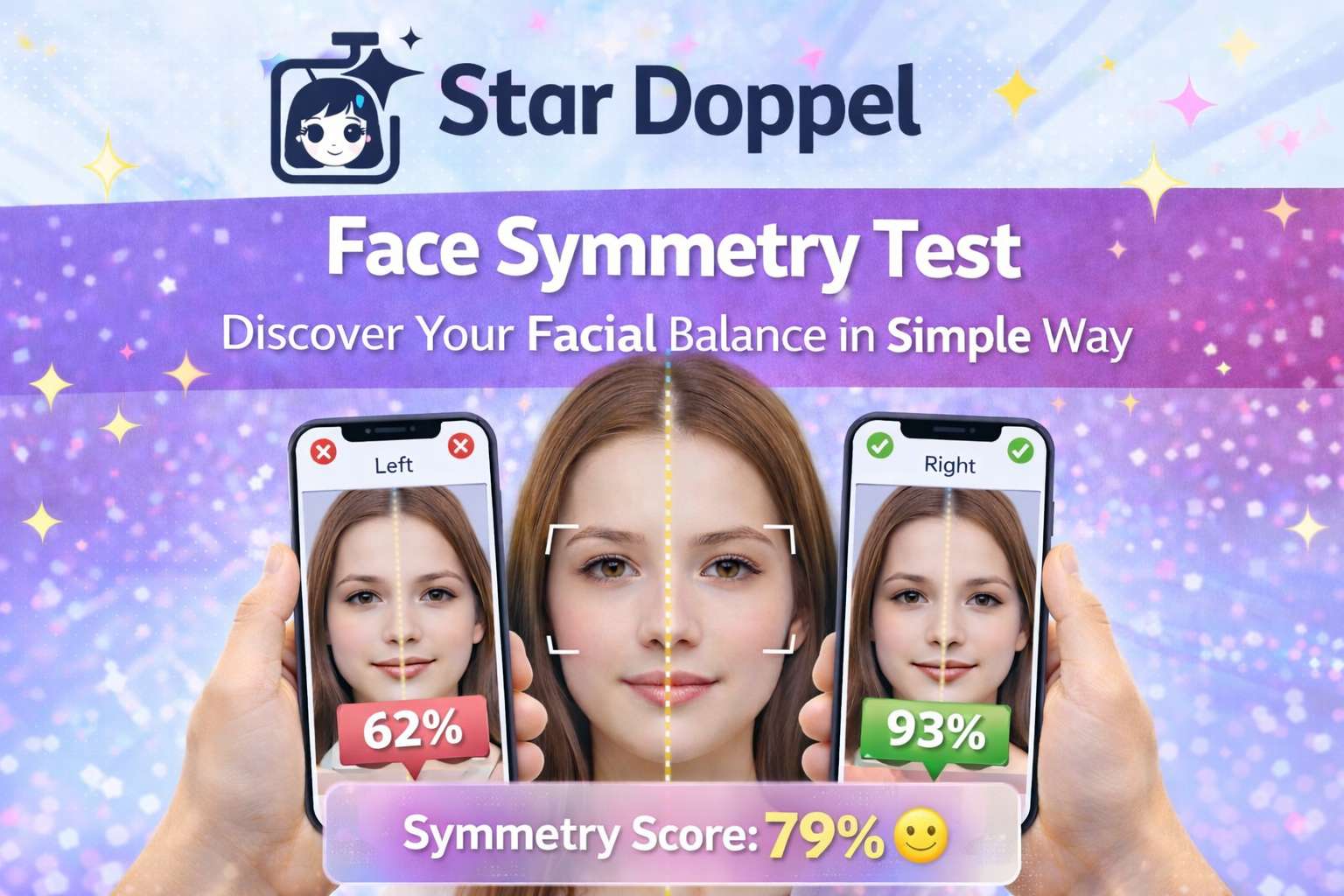
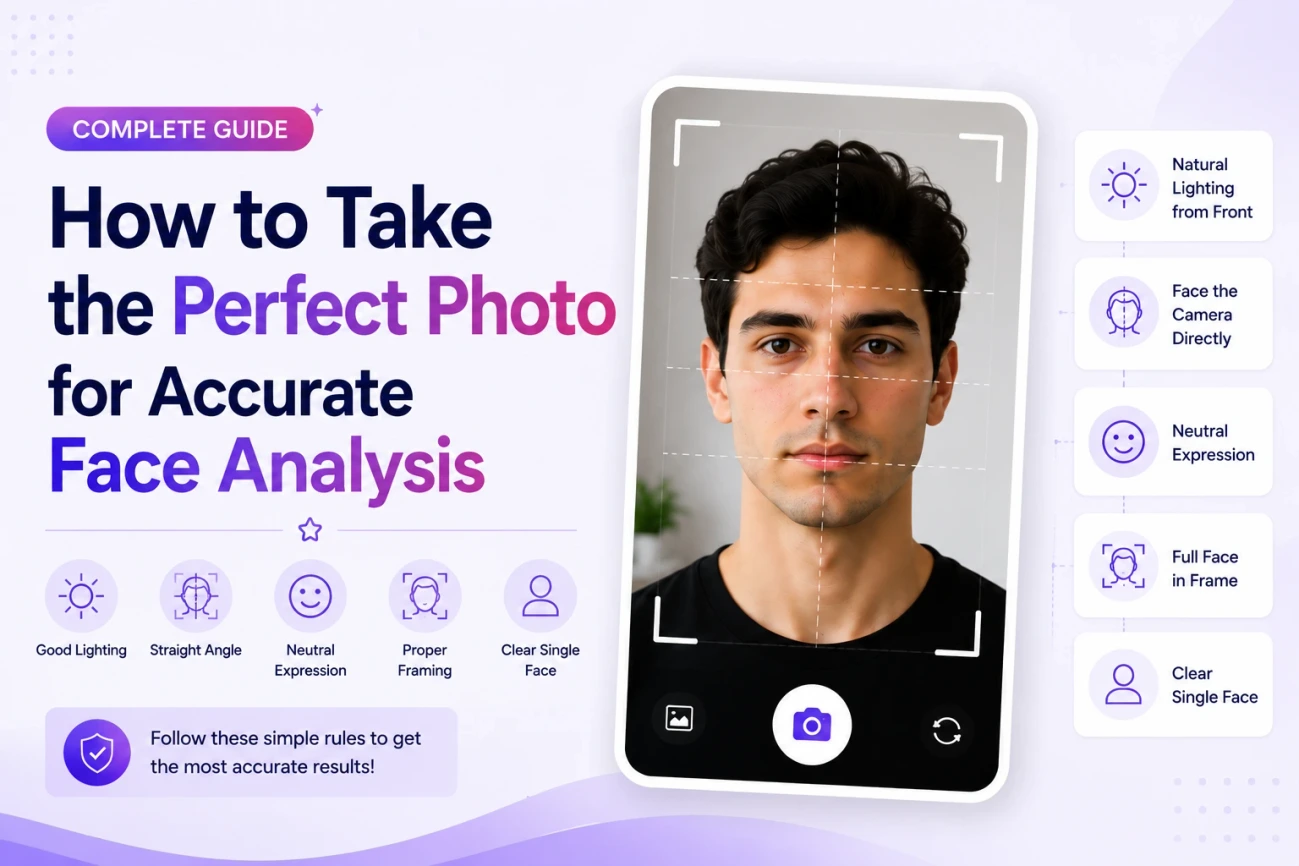
You upload a photo. The result comes back and something feels off. Your face shape looks wrong. Your symmetry score seems too low. Your age estimate is way outside what you expected.
Nine times out of ten the AI is not the problem. The photo is.
Every face analysis tool on this site from the Golden Ratio calculator to the Eye Shape detector reads the same raw material. A photo full of shadows or taken at a tilted angle gives the AI distorted data to work with and distorted data always produces a distorted answer. This guide walks through exactly what makes a photo usable and what quietly ruins a result before the analysis even starts.
Why the Photo Matters More Than the Algorithm
Every tool here works by placing invisible points across your face. It measures the distance and angle between your eyes your nose your jawline and your mouth. Those measurements only mean something if the points land in the right place to begin with.
A shadow across half your face can hide where your jaw actually ends. A tilted head can make one eye appear higher than the other even when your natural symmetry is fine. A wide smile can shift your cheek and mouth landmarks enough to throw off a face shape reading entirely. None of this is a flaw in the AI. It is simply how measurement based analysis works whether it is done by a machine or a trained professional with a ruler.
Five Rules for a Usable Photo
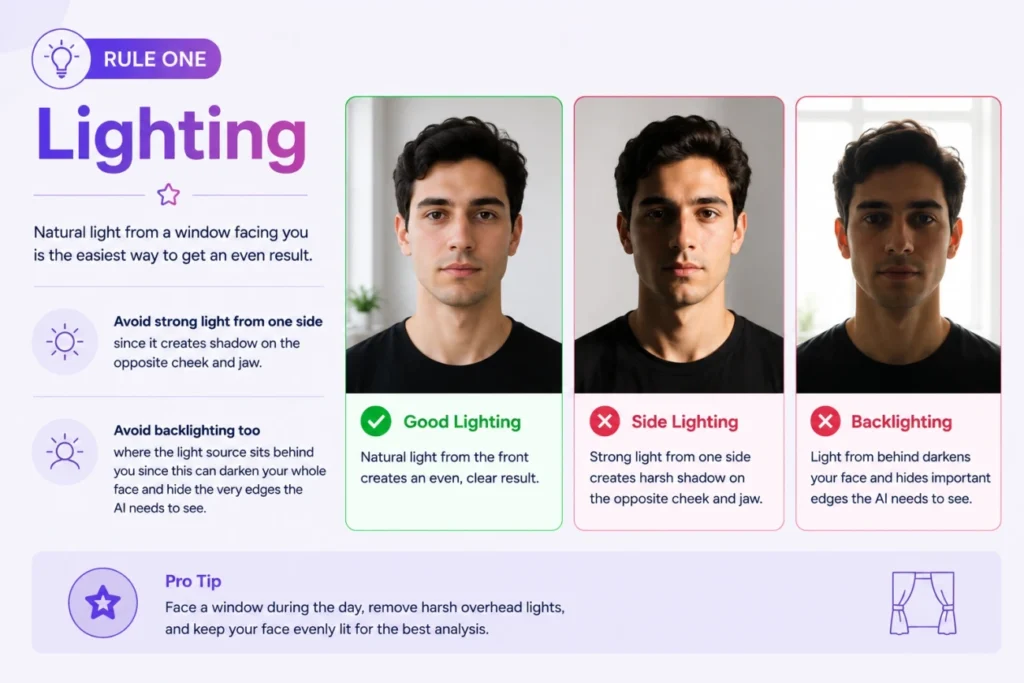
Rule One: Lighting
Natural light from a window facing you is the easiest way to get an even result. Avoid strong light from one side since it creates shadow on the opposite cheek and jaw. Avoid backlighting too where the light source sits behind you since this can darken your whole face and hide the very edges the AI needs to see.
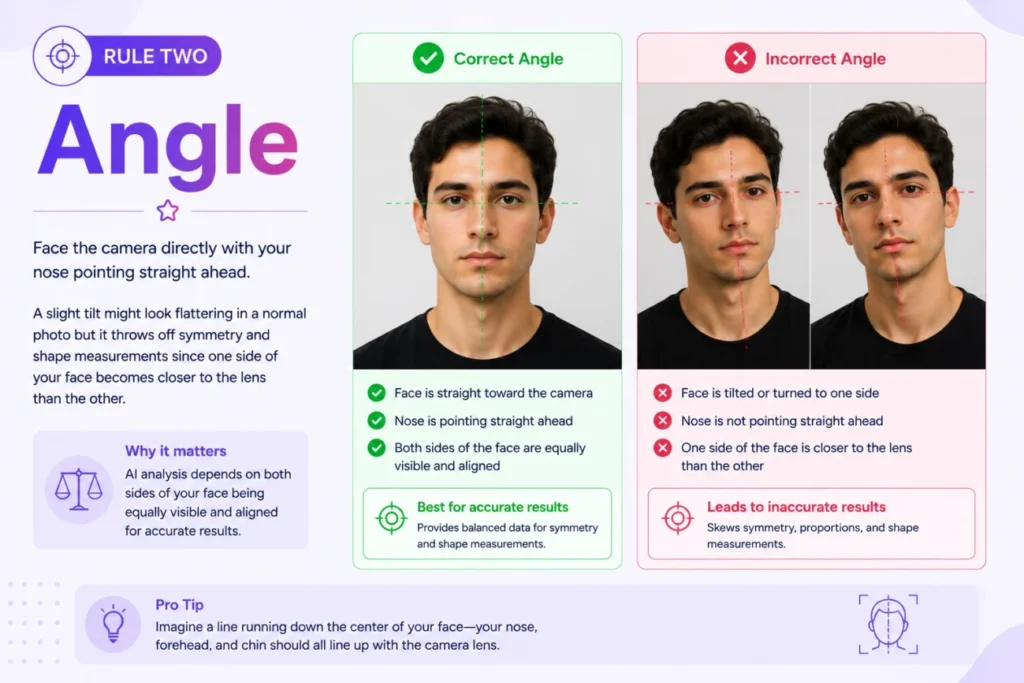
Rule Two: Angle
Face the camera directly with your nose pointing straight ahead. A slight tilt might look flattering in a normal photo but it throws off symmetry and shape measurements since one side of your face becomes closer to the lens than the other.
Rule Three: Expression
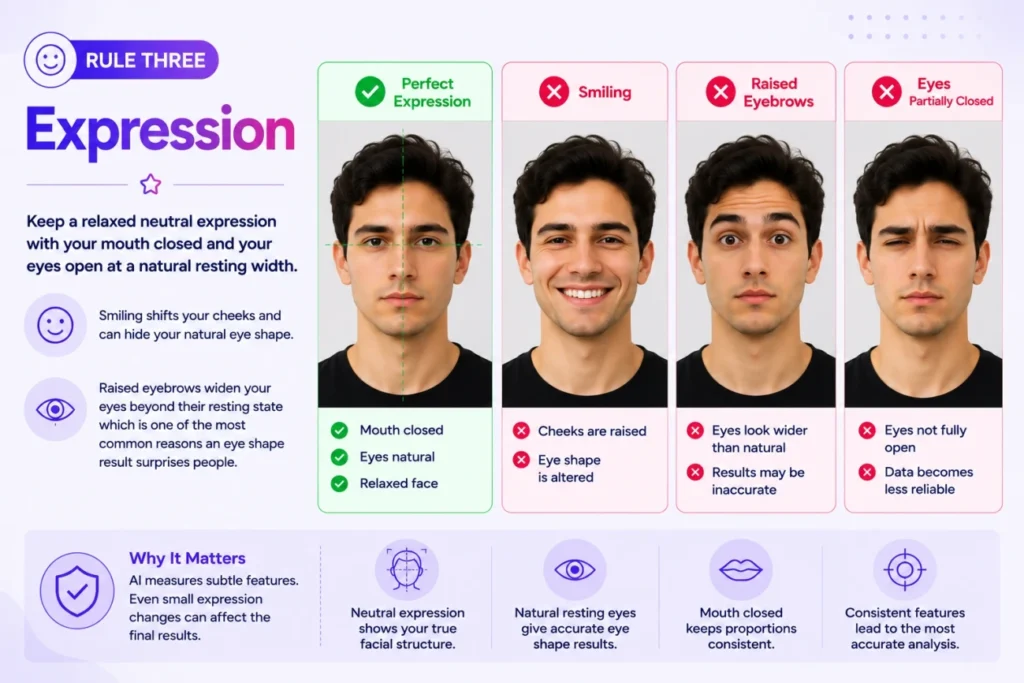
Keep a relaxed neutral expression with your mouth closed and your eyes open at a natural resting width. Smiling shifts your cheeks and can hide your natural eye shape. Raised eyebrows widen your eyes beyond their resting state which is one of the most common reasons an eye shape result surprises people.
Rule Four: Framing
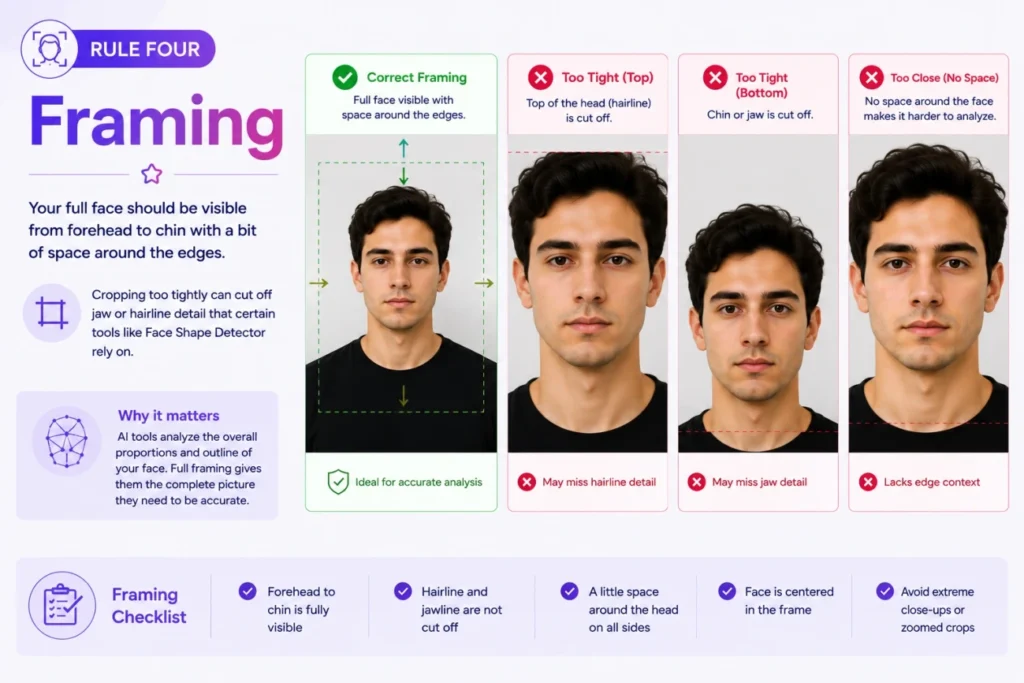
Your full face should be visible from forehead to chin with a bit of space around the edges. Cropping too tightly can cut off jaw or hairline detail that certain tools like Face Shape Detector rely on.
Rule Five: A Clear Single Face
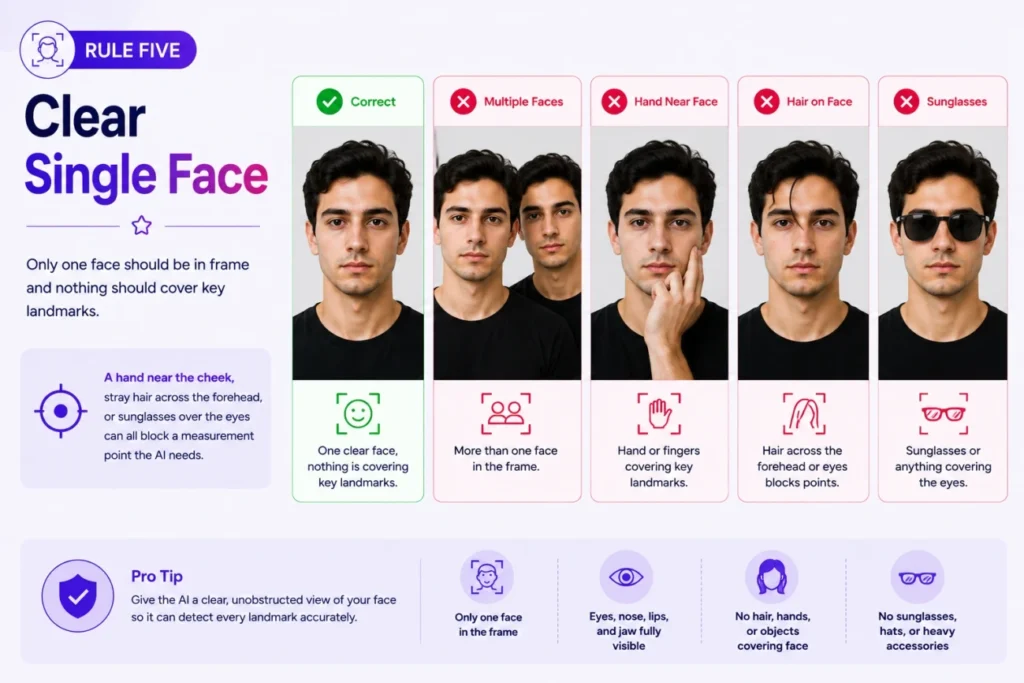
Only one face should be in frame and nothing should cover key landmarks. A hand near the cheek stray hair across the forehead or sunglasses over the eyes can all block a measurement point the AI needs.
Mistakes That Quietly Ruin a Result
A few habits sneak past people even when they think they followed the rules.
Filters and heavy editing apps smooth or reshape features before the photo ever reaches the analysis which means you are no longer measuring your actual face. Old photos are another common issue since faces change gradually over the years and a photo from five years ago will not reflect your current structure. Group photos cropped down to just your face often carry compression artifacts and awkward angles that were never meant to be viewed alone. And low resolution screenshots pulled from social media tend to lose the fine detail around the eyes and nose that these tools depend on most.
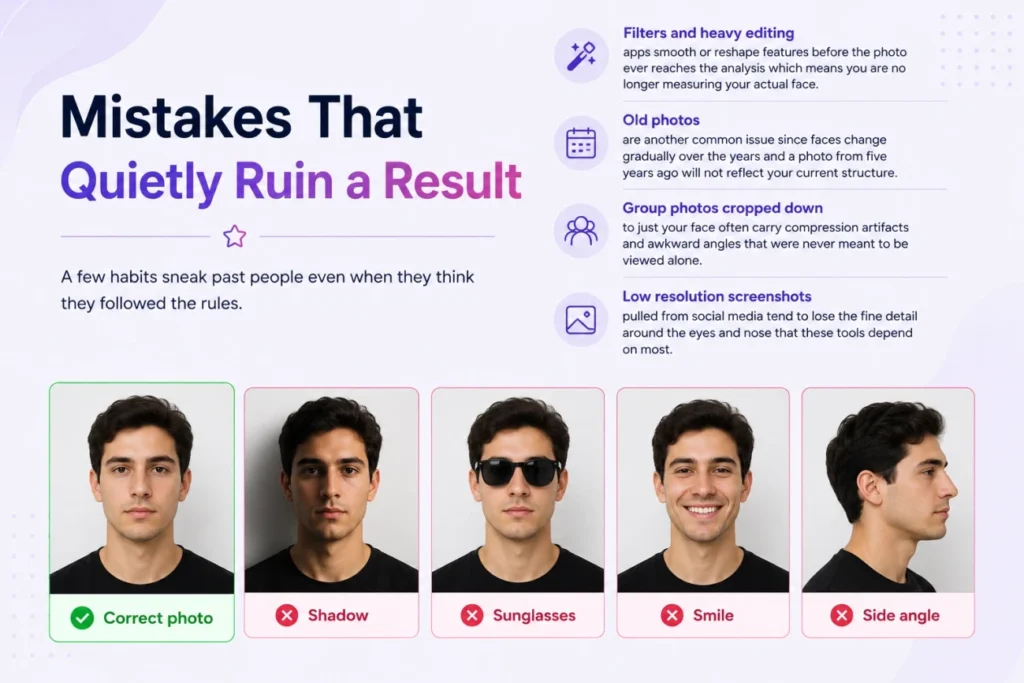
Photo Tips for Every Tool on This Site
While the five rules above apply everywhere a few tools benefit from one extra bit of attention.
Celebrity Look Alike Finder
Works best with a clear front facing photo since the AI is comparing your proportions against a large database and even small angle differences can shift which matches rise to the top.
Face Shape Detector
Needs your full hairline and jaw visible so pull hair away from your forehead and ears if possible.
Face Symmetry Test
Is the most angle sensitive tool on the site. Even a small head tilt can create a false asymmetry reading so this is the one tool where the angle rule matters most.
Golden Ratio Face
Measures several proportions at once including eye spacing and face height so a straight neutral shot with even lighting gives the most reliable score.
Face Age Test
Benefits from natural light without heavy shadow since shadow around the eyes and mouth can visually add years the AI then factors into its estimate.
Eye Shapes Test
Depends on a relaxed expression more than any other tool. A natural resting gaze rather than a wide eyed or squinting look gives the truest reading of your eyelid structure.
Lip Shapes Test
Needs a closed relaxed mouth. A smile changes lip shape significantly so keep your expression neutral for this one.
Nose Shapes Test
Works from a direct front angle. A slight downward or upward head tilt can visually shorten or lengthen the nose bridge in a way that does not reflect your actual shape.
Quick Checklist Before You Upload
Run through this before hitting analyze on any tool.
Is the lighting even across your whole face with no strong shadow on one side.
Is your head facing forward with your nose pointing straight at the camera.
Is your expression relaxed with your mouth closed and your eyes open naturally.
Is your full face visible from hairline to chin with nothing blocking key features.
Is the photo recent clear and free of filters or heavy editing.
If you can answer yes to all five you are ready for an accurate result on any tool across the site.
Frequently Asked Questions
Does photo resolution need to be very high?
No strict minimum exists. The image just needs to be clear enough that your facial features are sharp and not blurred or pixelated.
Can I wear makeup in the photo?
Yes. Normal makeup does not meaningfully affect results. Heavy contouring that reshapes the appearance of your face structure is the only real exception worth avoiding.
Will glasses affect my results?
Glasses can sometimes obscure the eye area slightly. Removing them is not required but it can improve accuracy for tools like Eye Shapes Test.
Does the photo get saved anywhere?
No. Every tool on this site processes your photo only to generate your result and deletes it immediately afterward.
Why did I get a different result the second time I uploaded?
Small differences in lighting angle or expression between two photos can shift measurements slightly. This is normal and is not a sign the tool is inaccurate.
Related Reading
Once your photo setup is right it works across every tool on the site. Explore your face shape your nose type or start with a full celebrity look alike match using the same clear front facing photo.