Key Takeaways
- Facial age analysis estimates apparent age from skin texture, symmetry, and structure, not your actual birth date.
- UV exposure is the single biggest controllable factor: it’s responsible for an estimated 80-90% of visible facial aging, according to research published in Clinical, Cosmetic and Investigational Dermatology.
- Sleep quality measurably changes how old a face looks. A controlled study found visible skin-aging signs increase after just two nights of restricted sleep.
- Photo conditions (lighting, angle, filters) can shift an age estimate as much as real skin changes can. See our full photo guide.
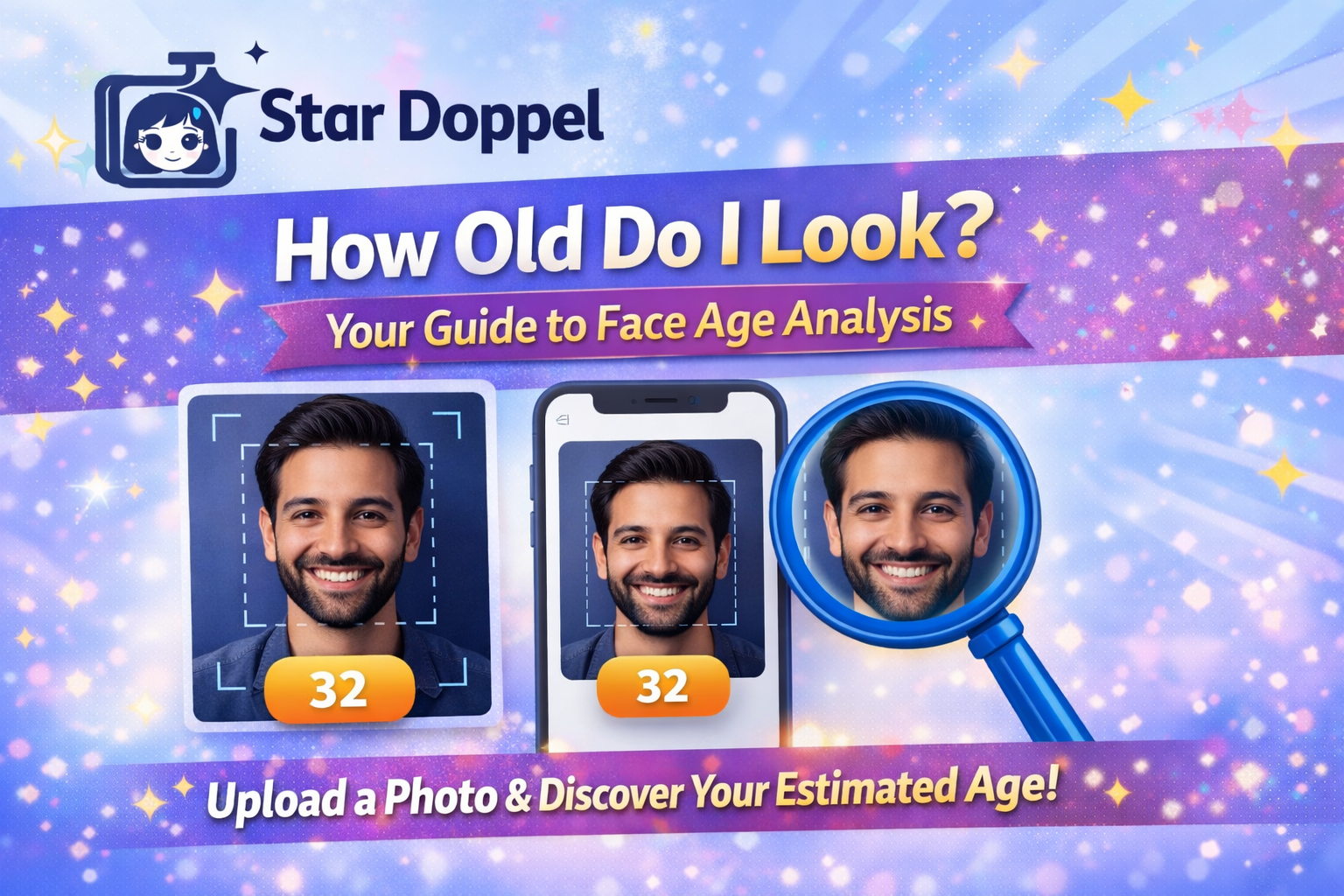
A face age test analyzes a photo and estimates the age a face structurally and visually presents. It looks at skin texture, symmetry, fine lines, and overall facial proportions to arrive at that number. This is different from guessing someone’s age casually, since the analysis is based on measured features rather than a quick impression. Want to see your own result? Try the AI face age tool.
How AI Estimates Facial Age
The process happens in a few distinct steps rather than one single calculation:
- Face detection. The system first identifies and isolates the face within the photo.
- Landmark mapping. Key points get placed across the eyes, nose, lips, and jawline to establish the overall facial structure.
- Texture analysis. The AI examines skin texture, tone, and the presence of fine lines or other visible age markers.
- Comparison and estimation. The measured features get compared against patterns learned from a large training dataset to produce an estimated age and range.
Because the estimate comes from visible structural and texture cues, it reflects apparent age, not a document-based number, and the two don’t always match.
Chronological Age Versus Apparent Age
| Chronological Age | Apparent Age |
|---|---|
| The actual number of years someone has been alive | The age a face visually appears to be, based on skin and structure |
| Fixed and unaffected by lifestyle | Influenced by genetics, sun exposure, sleep, and skincare habits |
| Cannot be measured from a photo alone | Exactly what a face age test is designed to estimate |
A face age result never claims to know someone’s actual birth date. It estimates what a face visually communicates, which can run younger or older than the number on an ID depending on the factors below.
What Actually Makes a Face Look Older
- Sun exposure, the biggest one. Research published in Clinical, Cosmetic and Investigational Dermatology attributes an estimated 80-90% of visible facial aging to UV radiation, making it the single largest controllable factor. Despite this, an American Academy of Dermatology survey found only 56% of people who worry about skin aging use sunscreen regularly, and just 20% do on cloudy days.
- Sleep quality. A clinical study published in Clinical and Experimental Dermatology (Oyetakin-White et al.) found poor sleepers showed measurably more signs of skin aging and slower recovery from UV exposure than good sleepers. A related trial found visible changes, reduced skin hydration, more dark circles, less elasticity, after just two nights of restricted sleep.
- Genetics. Inherited skin type, thickness, and the natural rate of collagen decline vary significantly between individuals, and set the baseline the other factors act on. A 2025 systematic review in Cosmetics covering 11 clinical studies identifies declining type I collagen as a central driver of dermal thinning and visible wrinkling as skin ages.
- Skincare habits. Consistent cleansing, moisturizing, and daily sun protection support a more even complexion over time.
- Lifestyle choices. Smoking, hydration levels, and diet all play a measurable role in how skin ages visibly, see our full list of evidence-based habits for specifics on each.
- Expression patterns. Repeated facial expressions contribute to fine lines over the years, though research suggests this factor is smaller than sun exposure or sleep.
Getting an Accurate Face Age Result
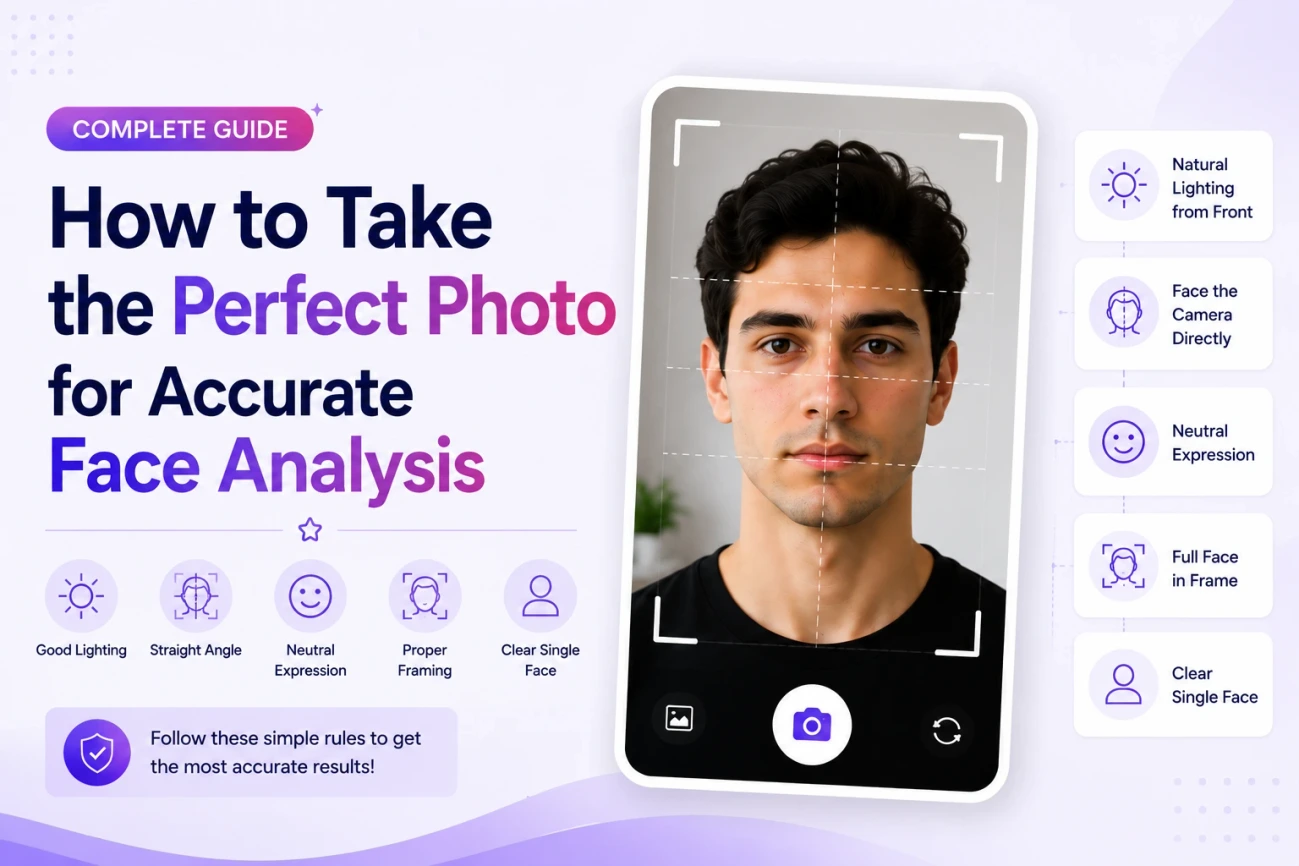
Photo conditions affect the result as much as real skin changes do. Even lighting, a straight-on angle, no filters, and a recent high-resolution photo all matter. Read the full photo guide for the complete breakdown, worth a look before you try the tool.
Why Results Can Vary Between Photos
It’s normal to get a slightly different estimate from two photos of the same person. Lighting, angle, expression, and even time of day can all shift how skin texture and fine lines appear. A tired expression after a poor night’s sleep can visibly add a few years compared to a well-rested photo. This isn’t a flaw in the tool. It reflects the same variation a human observer would notice too.
Privacy and How Photos Are Handled
Uploading a personal photo to any online tool is worth taking seriously. A responsible platform processes an image only long enough to generate the result and deletes it immediately afterward, rather than storing it. Check a site’s privacy policy before uploading if this matters to you, since standards vary across platforms.
Practical Uses Beyond Curiosity
- Tracking how a new skincare routine or lifestyle change affects apparent age over several months.
- Getting a general sense of which visible factors, like sun damage or fine lines, might be worth addressing.
- Simply satisfying the common curiosity of wondering how a face reads to someone seeing it for the first time.
None of these results should be treated as medical or dermatological advice. They reflect a structural and visual estimate rather than a clinical assessment. Raise any specific skin concern with a licensed dermatologist, not an online tool.
Common Misconceptions
Myth: A higher estimate means something is wrong with your skin. An estimate above someone’s actual age simply reflects visible factors in that specific photo, lighting, cumulative sun exposure, a tired expression. It’s not a diagnosis and carries no health implication on its own.
Myth: The AI is reading your birth certificate somehow. The system has no access to any personal or official record. It works purely from visible facial and skin cues, which is why apparent and chronological age can reasonably differ.
Myth: One bad result means the tool is broken. A single photo is only a snapshot under one set of conditions. A result that seems off on one attempt is usually a reflection of that photo, not a sign the tool itself is inaccurate.
Combining Age Results With Other Facial Analysis
An age estimate becomes more useful alongside other structural details rather than as an isolated number. Pairing an age estimate with face shape, eye shape, and skin tone analysis from the same photo gives a fuller picture, useful for styling or skincare decisions, and some people enjoy pairing it with a celebrity look-alike match simply out of curiosity.
Frequently Asked Questions
How does a face age test actually work?
It maps facial landmarks and analyzes skin texture, tone, and fine lines, then compares those measurements against patterns learned from a large dataset of facial images to produce an estimated age.
Why did I get a different age estimate the second time I tried?
Small differences in lighting, angle, expression, or tiredness can shift how skin texture and fine lines appear, moving the estimate slightly. This is expected and normal.
Does a face age test measure my actual birth date?
No. It estimates apparent age based on visible structural and skin cues, not chronological age, and the two numbers don’t always match exactly.
Can lifestyle changes actually lower my face age result over time?
Consistent daily sun protection, better sleep, and proper hydration can support a more youthful visible appearance over months, which may show up as a lower estimate compared to an earlier photo.
Is my photo stored after the analysis runs?
On a responsible platform, your photo is only used to generate the result and deleted immediately afterward, not stored or shared.
Can filters or makeup affect the accuracy of my result?
Yes. Filters that smooth or reshape features and heavy makeup can both mask the natural skin texture the analysis depends on, making the estimate less accurate.
Does the same tool work equally well on mobile and desktop?
Yes. Since the analysis runs on the photo itself rather than the device, results should be consistent across phone and desktop uploads as long as image quality is similar.
Curiosity about how old a face looks is harmless to explore, and facial age analysis gives that curiosity a measured, evidence-based answer instead of a guess. Try it for yourself with the free AI face age tool.